

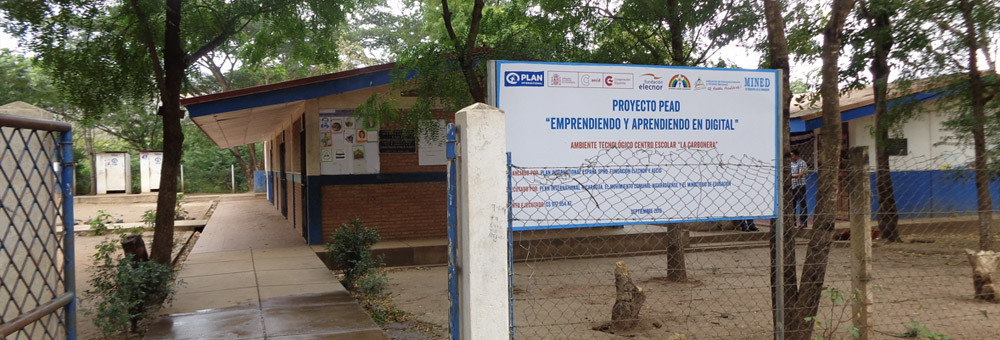
The aim of this project which culminated in June 2017, was to improve education and training for local people, especially children and adolescents from the Miskita ethnic group, through the sustainable use of ICTs. It has directly benefited almost 3,800 people.
To implement the Starting Out and Learning in Digital (PEAD) project, the Elecnor Foundation took part with Plan International Nicaragua in the Spanish International Development Cooperation Agency (AECID)’s 2015 funding round for Non-Governmental Development Organisations.
PEAD has directly benefited 3,778 people in six remote communities of Francia Sirpi in the north of Nicaragua. It is the country’s most vulnerable region in social terms, with a severe poverty level of 71%. It is also a region with a high concentration of indigenous people. In fact, it is home to 70% of all the indigenous population and those of African descent throughout Nicaragua. And within this segment, the Miskitu are the largest ethnic group, representing 91% of the communities included in the project.
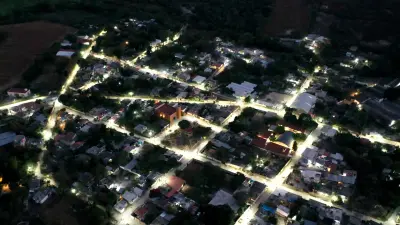
The lack of electricity means that are serious contamination issues stemming from the use of kerosene lamps, batteries, and, in very remote areas, the use of diesel motors. Among the indigenous communities there are cultural obstacles that hinder the implementation of new technologies and access to energy, thus increasing their technological isolation.
The arrival of the digital kiosk
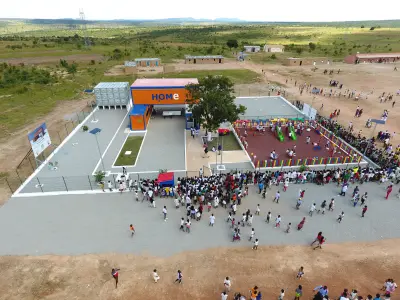
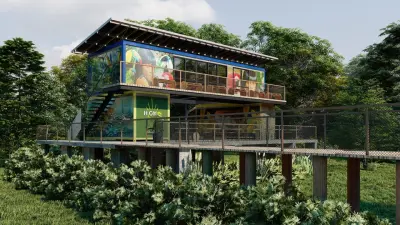
The digital kiosk is a community space set up in a classroom attached to the community school which offers access to basic telecommunications services, i.e. telephony and internet, and educational materials.
The project is based on an inclusive community management model, and its long-term viability is ensured by charging small amounts for services and the installation of a premium-quality photovoltaic system that ensures that the kiosk can operate off-grid.
Back-up battery systems have been installed for periods when there is insufficient solar radiation, which can power the kiosk for three days if required. There is also a satellite connector which allows for four hours of data downloading per day, telephone communication, the recharging of mobile phones and document printing and scanning. These services will finance maintenance and enable green jobs to be created.
Main Activities
This model can also be used in other areas of Nicaragua where the social and technological divide is pronounced. These are some of the key activities carried out during the project: