

CSR policies are being implemented in the business lines, subsidiaries and local operations of international Spanish companies

Spain's most internationalised companies regard CSR (Corporate Social Responsibility) as important or very important in the international context in which they operate. This is one of the findings of a report entitled Internationalisation and Social Responsibility in Spanish companies, produced by the Global Centre for Sustainable Business of Deusto Business School, with the support of the Elecnor Foundation.
According to this report, based on interviews with the CSR directors of internationalised Spanish companies in the Ibex 35*, CSR has become not only useful but an essential element of these companies' day-to-day business activities. And internationalisation has been a key driver of progress in this sphere.
For 83% of the companies analysed, the progress in CSR achieved through the internationalisation process is underpinned by their learning in relation to non-financial business risks. And for 66%, their learning was driven by the identification of fresh opportunities for value creation in new local contexts.
These internationalised companies also acknowledge the key role played by institutional investors in the report. Their burgeoning insistence on the adoption of CSR practices as an investment condition means CSR is becoming a key element of companies' road shows.
Furthermore, CSR has become essential in forging a sustainable and positive relationship with the authorities and local communities for companies whose activities have a significant impact on economies and societies in emerging or developing countries.
The companies interviewed indicate that in cases where they are selling to customers who are not end consumers, CSR is becoming a useful tool for securing new contracts.
The report also underlines that the CSR function is global and at the same time acts locally. In 42% of the firms analysed, the senior CSR committee that operates across the company is reproduced to scale in the countries where it operates. In 42% of cases the CSR function has a network of interlocutors or specialists in various countries, but 58% of companies have a CSR team in each of the main countries where they operate or are moving in this direction having established teams in some countries.
Furthermore, at 91% of the organisations analysed, annual CSR targets are iterated between the CSR function and business units or local teams.
CSR has already been incorporated into the performance elements of corporate functions, business units and subsidiaries “and this process will not be reversed”, according to the companies analysed, of which 50% confirm that a commitment to sustainability is enshrined in the mission or vision for their business.
The vast majority of these companies (83%) have an executive, cross-business body responsible for CSR and its function is at the very highest level. In 58% of cases, a sub-committee of the board of directors oversees CSR.
The report's author, Manuel Escudero, director of the Global Centre for Sustainable Business, emphasises the significant strides made in CSR over the last five years, at the height of the economic crisis. “We have seen very marked progress in CSR. The process of change in the role of the company in the 21st century from an irresponsible business whose sole purpose was to maximise shareholder value to one that reins in irresponsible behaviour and prevents negative social and environmental impacts is starting to become a reality”. He adds “however, not all the companies analysed for this report have completed the process of making CSR a key driver. All merit, and with a high grade, the description of advanced socially responsible companies. However, fewer have successfully put CSR at the heart of their business. Those that have succeeded in doing so have a clearly stated social purpose in their purpose for making money. And this makes these companies markedly different from those that, while having made progress with their CSR practices, have yet to transform the very nature of their businesses. Perhaps this is the new frontier for CSR.”
The complete report can be downloaded at www.dbs.deusto.es/sustainablebusiness
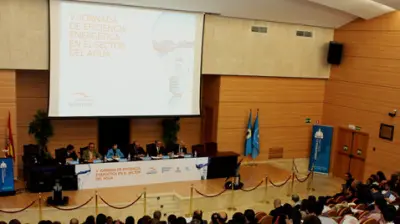
The first Deusto Business School - Elecnor Foundation Dialogue Forum
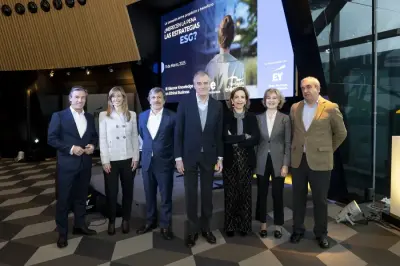
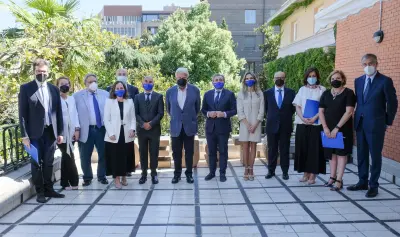
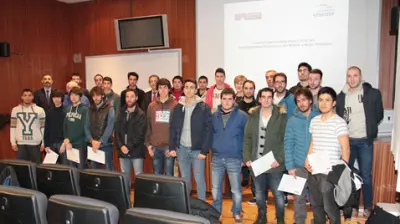
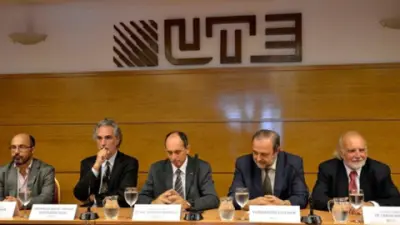
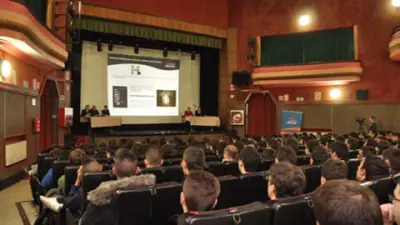
Deusto University presented this report as part of the first Deusto Business School - Elecnor Foundation Dialogue Forum. Held on 25 March, this event brought together international experts to discuss the vital importance of Corporate Social Responsibility and Corporate Sustainability in business internationalisation. The keynote speakers included Ernst Ligteringen, Chief Executive of the Global Reporting Initiative. The Forum also included a roundtable discussion with leading politicians including Arantza Quiroga, Ramón Jauregi and José Ramón Beloki.
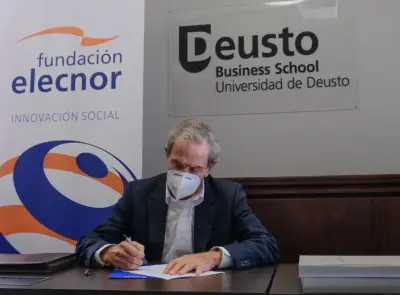
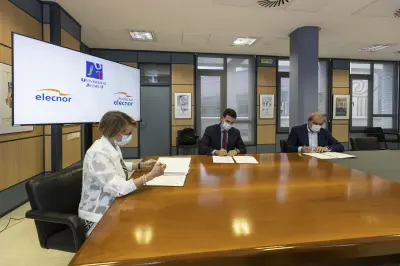
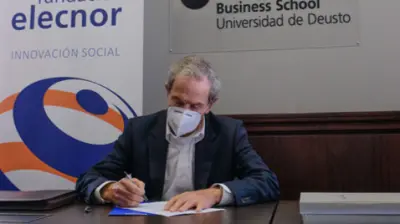
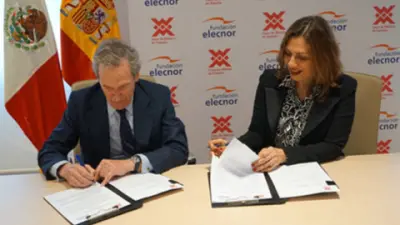
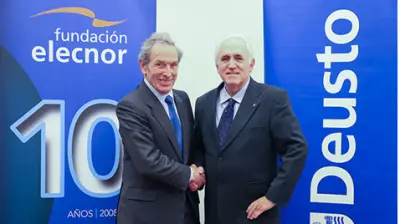
This forum was organised by Deusto Global Center for Sustainable Business, created within Deusto Business School as a global teaching centre for sustainable business, under the agreement between the Elecnor Foundation and Deusto Business School to jointly establish and develop forums and training initiatives in the area of sustainability, CSR and social innovation.
Schedule for the Forum
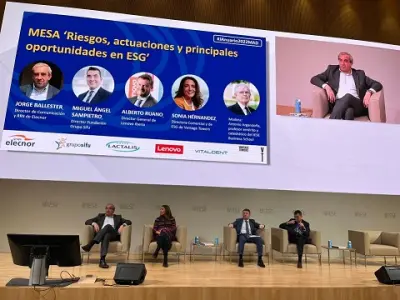
José María Guibert, Rector of Deusto University, Fernando Azaola, Chairman of Elecnor and of the Elecnor Foundation, and Ricardo Barcala, the Basque Regional Government’s Deputy Minister for Employment and Labour, inaugurated the event, where Jesús Gracia, Secretary of State for International Cooperation and Latin America, gave a keynote speech entitled Business Internationalisation and Contribution to Development. This was followed by the roundtable discussion on CSR and Internationalisation, where CSR experts discussed the significance of CSR processes in business internationalisation. The speakers were: José Antonio Gutiérrez, Director of the Endesa Foundation; Felicidad Cristóbal, CEO of the ArcelorMittal Foundation; Elena Valderrábano, General Manager of the Telefónica Foundation; and Juan Felipe Puerta, Director of CSR and Reputation at Iberdrola.
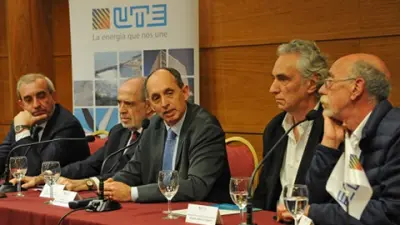
Next in the schedule was another roundtable discussion entitled "Public/Private Partnerships: backing the future of CSR", featuring public and third sector representatives, on the prospects of public/private partnerships. The speakers were: Rafael Martín de Bustamante, CEO of Elecnor; Juan Ramón Beloki, a former Basque Nationalist Party (PNV) Member of Parliament; Arantza Quiroga, President of the Basque Popular Party; Ramón Jáuregui, a former minister and Socialist Party Member of Parliament; and Eduardo San Martín, Director of the Rotary Club, Zone 13.
The Forum was rounded off with a lunch where participants held a discussion entitled "The future of CSR up to 2020", hosted by Ernst Ligteringen, Chief Executive of the Global Reporting Initiative, who was introduced by José Luis Blasco, KPMG partner responsible for Climate Change and Sustainability in Europe, the Middle East and Africa.
The Elecnor Foundation is a private, non-profit entity that pushes the company’s intervention into the social arena in two areas: social infrastructure and training and research. The aim is to demonstrate the commitment engineering has to human beings and society. The Foundation is closely linked to Elecnor, one of the leading Spanish companies and a benchmark player in the infrastructure, renewable energies and new technologies sectors, present in over 30 countries and with 12,500 employees.
Deusto Business School is Deusto University’s business school, specialising in educational services for future business leaders. It has a wide experience in providing and managing these services and a professional team capable of developing its activities.
*The author selected those Ibex 35-listed companies most active in CSR based on eight indicators (Leadership within their sector group in the Dow Jones Sustainability Index, Leadership within their group in the FTSE4GOOD, Membership of the Carbon Disclosure Project, Membership of the Global Compact LEAD Group. An A rating in the Global Reporting Initiative, an Advanced score in the United Nations Global Compact, inclusion in the group of companies mentioned by the the Business Monitor of Corporate Reputation (MERCO) and inclusion in the group of companies mentioned in the Global 100.