

The president of the Madrid Regional Government, Cristina Cifuentes, inaugurates the Ronald McDonald House in Madrid

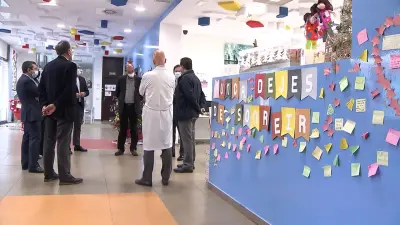
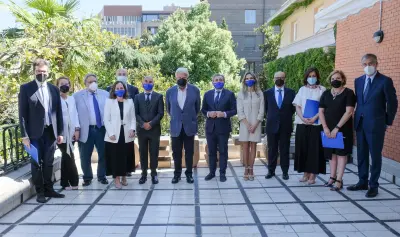
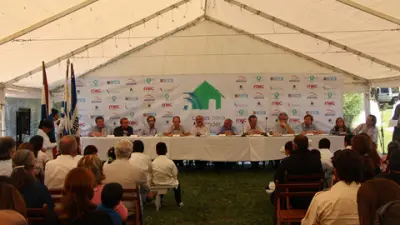
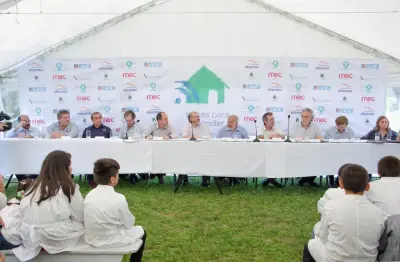
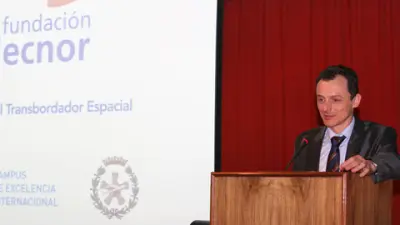
The Ronald McDonald House in Madrid, located in the Niño Jesús University Children's Hospital, has been inaugurated by the president of the Madrid Regional Government, Cristina Cifuentes, with the attendance of Blanca Moreno, President of the Ronald McDonald House Charities; Fernando Azaola, Chairman of Elecnor and of its Foundation; Rafael Gil Alfaro, President of the House Board; and Irene Villa, a patroness of the House.
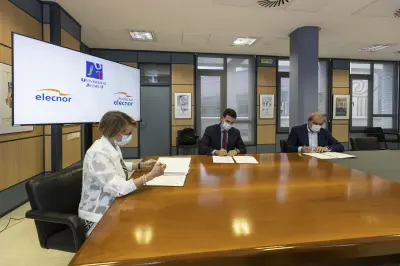
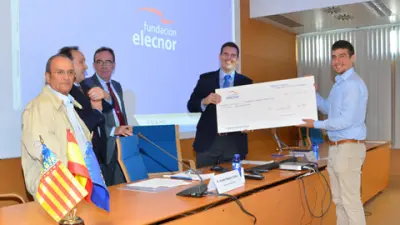
This project has been possible thanks to the partnership agreement reached between the Ronald McDonald House Charities and the Elecnor Foundation, which included the carrying out of the energy efficiency project for the House prepared by the Elecnor Renewable Energy and Energy Efficiency Chair of the School of Industrial Engineering of the Madrid Polytechnic University, and a donation equivalent to the average annual maintenance cost expected for a facility of this type. Elecnor has also built the House.
It is the first Ronald McDonald House in Madrid and the only one of the four already existing in our country –the other three are located in Barcelona, Malaga and Valencia– that has been built using environmental and energy efficiency criteria. Its purpose is to provide a home for families who have to travel a long distance to spend time with their children in hospital as a result of diseases or treatments requiring a long stay.
Since its opening in January 2015, over 270 families have stayed at this residence, which has 23 apartments, where parents and children can be together and have a "home away from home" during their treatment.
The Project
The building is designed as a single long unit with a surface area of approximately 3,000 m2 divided into 4 floors. The two top floors house 23 different apartments for the families, while the common areas (kitchens, dining rooms, lounges, rooms for games and computers, gym and even a study area) are located on the ground floor and the basement houses a car park.
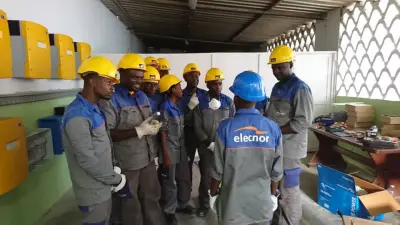
Elecnor has applied its knowledge and expertise in engineering, renewable energy and energy efficiency to reduce energy costs in the three main areas of consumption: lighting, air conditioning and domestic hot water (DHW).
The building uses the most efficient technologies to achieve overall energy savings of around 46.5% compared to conventional facilities and a reduction in CO2 emissions of 52.45 tons, attaining the same effect as planting over 8,700 trees.
Specifically, the building uses LED lights donated by Philips, thanks to the partnership agreement between this company and the Elecnor Foundation, and control systems that are expected to save around 70% compared with a facility that uses conventional technology.
The building's air conditioning is based on geothermal energy, which uses a renewable and endless source of heat stored underground at depths of between 100 and 150 metres. As a result, the energy efficiency of this air conditioning system is at least 400% in heating mode and 500% in cooling mode.
The building also has electricity-producing photovoltaic panels that provide 4.5137 MWh of energy a year.
Lastly, to meet the DHW needs, two renewable energy sources are used: thermal solar installation (main system) and geothermal heat pump (support system). 64% of the hot water needs are covered by the thermal solar installation, while the rest is covered by geothermal energy, which helps reduce the system's electricity consumption and improve efficiency compared to other conventional systems.