

The Ronald McDonald House energy efficiency project is selected as a Climate Project
The Governing Board of the Carbon Fund for a Sustainable Economy (FES-CO2) has selected 42 Climate Projects of the Spanish Ministry of Agriculture, Food and the Environment that will prevent the emission of around one million tonnes of CO2 equivalent.
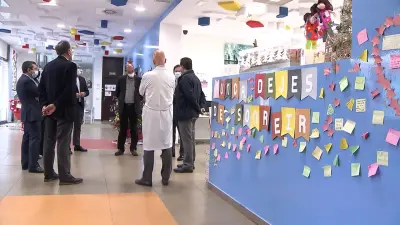
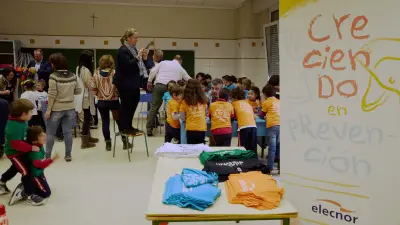
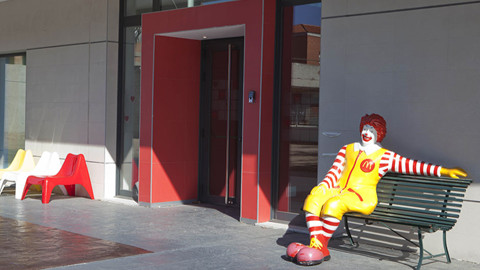
The projects selected include the energy efficiency initiative developed by Elecnor and its Foundation for the Madrid Ronald McDonald House of the Ronald McDonald Children's Foundation.
The aim of Climate Projects is to develop initiatives that reduce emissions through the purchase of these reductions by the Spanish Climate Change Office, part of the Spanish Ministry of Agriculture, Food and the Environment. This is the third call for Climate Projects and resulted in the acquisition of the the emissions reductions for the 42 projects selected at a price of approximately €7/tCO2.
Our company submitted its proposal in tandem with ANESE, the National Association of Energy Service Companies, of which we are a member, and was chosen along with another five of its partners: 9REN, ESEN, ENERFIZENTIA, EQA and REMICA. It is estimated that the projects submitted by these six companies will achieve a reduction of around 19,000 tonnes of CO2 in the diffuse emissions sector over the next four years.
Climate Projects are developed in Spain, help to avoid greenhouse gas emissions, generate sustainable economic activity and boost employment in our country.
The Ronald McDonald House, an example of efficiency at the service of children
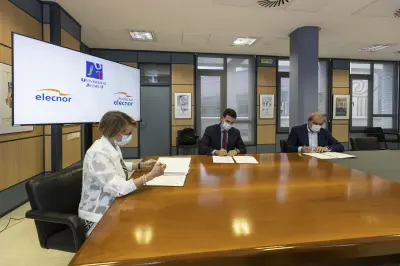
Elecnor built the Madrid Ronald McDonald House on a turnkey basis in the grounds of the Niño Jesús Children's Hospital. Additionally, the Elecnor Foundation has contributed through the Energy Efficiency Project, together with the Elecnor Foundation Chair of Renewable Energy and Energy Efficiency, created jointly with Madrid's Polytechnic University.
The House is the largest of all the Ronald McDonald Children's Foundation's houses in Spain, with a total area of 3,000 m2. It has 23 rooms with private bathroom and terrace and facilities for sharing experiences such as dining rooms, games rooms, a computer area and a library where children can be helped with their studies.
This Energy Efficiency Project aims to provide modern, sustainable, energy-efficient solutions that reduce the environmental impact and high annual running costs of a Ronald McDonald House.
The House's facilities have been designed using the most efficient technologies viable given the location of the building and its characteristics. The following technologies have been used:
- Hot water production using solar power supported by a ground-source heat pump.
- Hot and cold water production for climate control using ground-source heat pumps.
- Solar panels for electricity generation.
The facilities have also been designed to optimise energy demand through intelligent temperature and lighting regulation and control systems.